Silver Filigree in the National Conversation | PM Modi mentioned Cuttack's Silver Filigree in Mann ki Baat
Updated: Apr 18
In a country as culturally layered as India, recognition often defines revival. When the Hon’ble Prime Minister, Narendra Modi, spoke about artisans and traditional crafts in Mann Ki Baat, it marked more than just appreciation, it signalled a shift in how India views its own creative legacy.
Among the many crafts highlighted, Odisha’s silver filigree, known as Rupa Tarakasi, found a place in this national narrative. For a craft that has existed for centuries, yet often remained confined to regional awareness, this moment carried weight. It brought visibility, legitimacy, and renewed attention to a form of artistry that represents patience, precision, and generational knowledge.

A Craft Rooted in Time
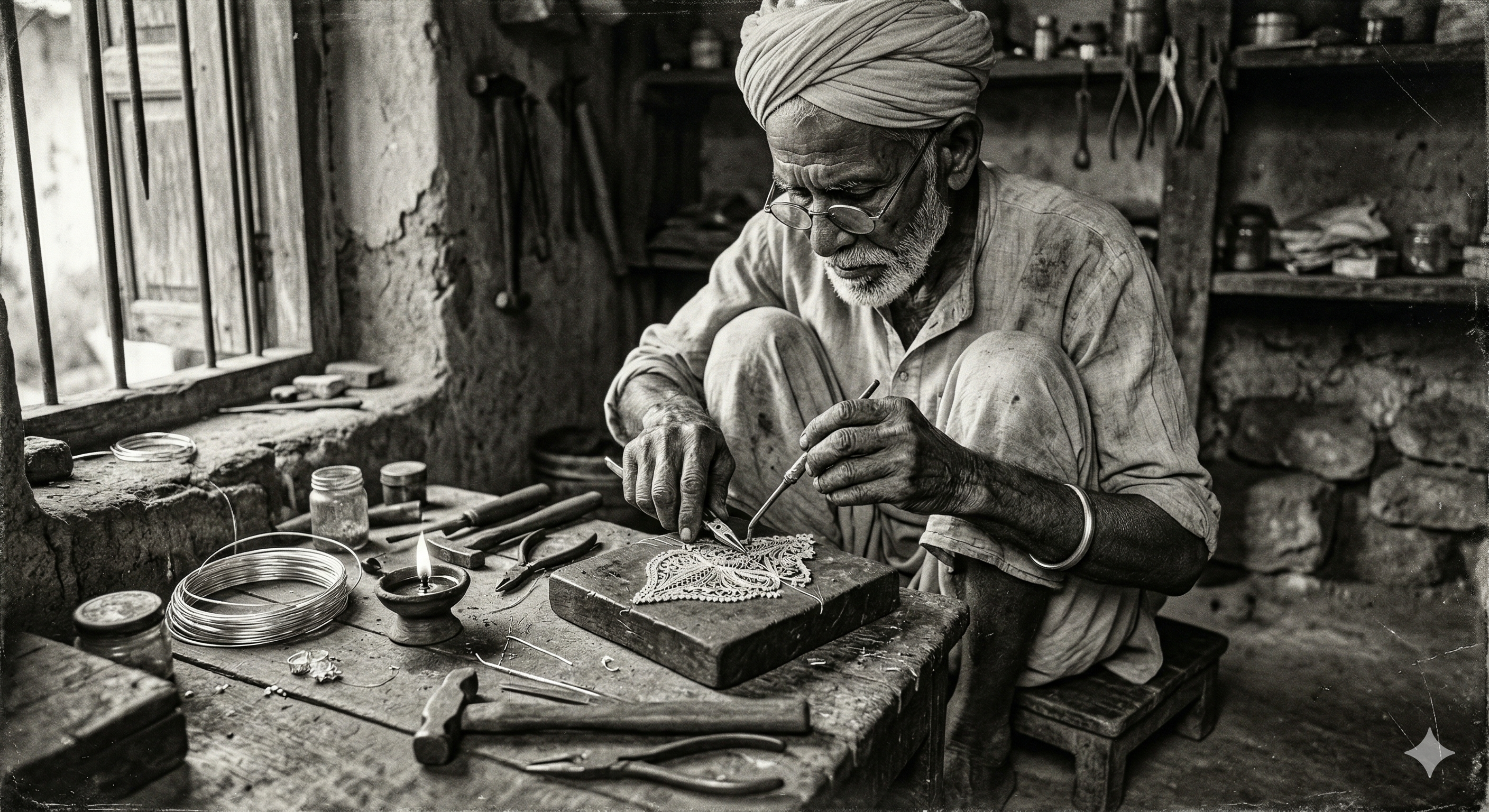
Silver filigree from Cuttack is not merely decorative. It is architectural in its making. Fine strands of silver are twisted, shaped, and assembled into intricate patterns that demand both technical skill and artistic intuition. Every piece is a result of hours, sometimes days, of meticulous work.
Historically, this craft evolved in a city that was once a hub of maritime trade. Through routes connected by Bali Jatra, artisans and traders carried not just goods but cultural identity across regions. Filigree became one of those expressions, delicate, detailed, and deeply Indian.
Yet, despite its richness, the craft slowly became limited in reach. It was often seen within the lens of tradition, ceremonies, or local markets, rather than as a form of contemporary design or global luxury.

PM Modi gifts Cuttack's Rupa Tarakasi to Ghana's First Lady
Recognition That Resonates
When national platforms begin to speak about such crafts, they do more than celebrate, they reposition. The historical significance of this trade relationship between India and Bali, Indonesia has also received recognition on global platforms. During the G20 summit in Bali, Hon’ble Prime Minister of India, Narendra Modi, acknowledged the deep-rooted connection between the two regions, referencing Bali Jatra as a testament to centuries-old trade and cultural ties. This acknowledgment reinforces the relevance of Odisha’s maritime history in shaping India’s global identity.
This distinction matters.
Because for artisans, recognition translates into:
Increased awareness of their work
Greater demand and appreciation
Renewed dignity in their profession
Opportunities for younger generations to continue the craft
For audiences, it shifts perception. It encourages people to look beyond mass-produced alternatives and rediscover the depth of handmade artistry.
The Shift from Preservation to Participation
India has long spoken about preserving its crafts. What is changing now is the movement toward participation.
The conversation is no longer about keeping traditions alive in isolation. It is about integrating them into modern life, into homes, personal style, gifting, and design.
Silver filigree stands at a unique intersection:
It is visually intricate yet adaptable
It carries cultural depth yet allows contemporary interpretation
It holds material value while offering artistic expression
This makes it not just a craft to preserve, but a medium to evolve.
Why This Moment Matters for the Future
The mention of artisans and crafts at a national level creates a ripple effect across industries:
1. Design Evolution
Crafts begin to be reinterpreted through modern design thinking.
2. Market Expansion
Awareness leads to demand beyond regional boundaries.
3. Cultural Relevance
Craft becomes part of everyday aspiration, not just tradition.
4. Economic Sustainability
Artisan communities gain access to better opportunities and structured growth.
For silver filigree, this is particularly important. Its complexity and time-intensive nature demand a system where value is recognised beyond material cost.
A Continuing Journey
The mention of silver filigree in a national dialogue is not a culmination. It is a beginning.
It opens the door for crafts like Tarakasi to move from the margins into the mainstream of design and luxury. It creates a space where heritage is not static, but dynamic—capable of evolving with time while retaining its essence.
What once existed quietly in the lanes of Cuttack now has the opportunity to be seen, valued, and carried forward.


Comments