The Silver That Once Sailed | Cuttack's Maritime trade that shapes Padmesh's heritage.
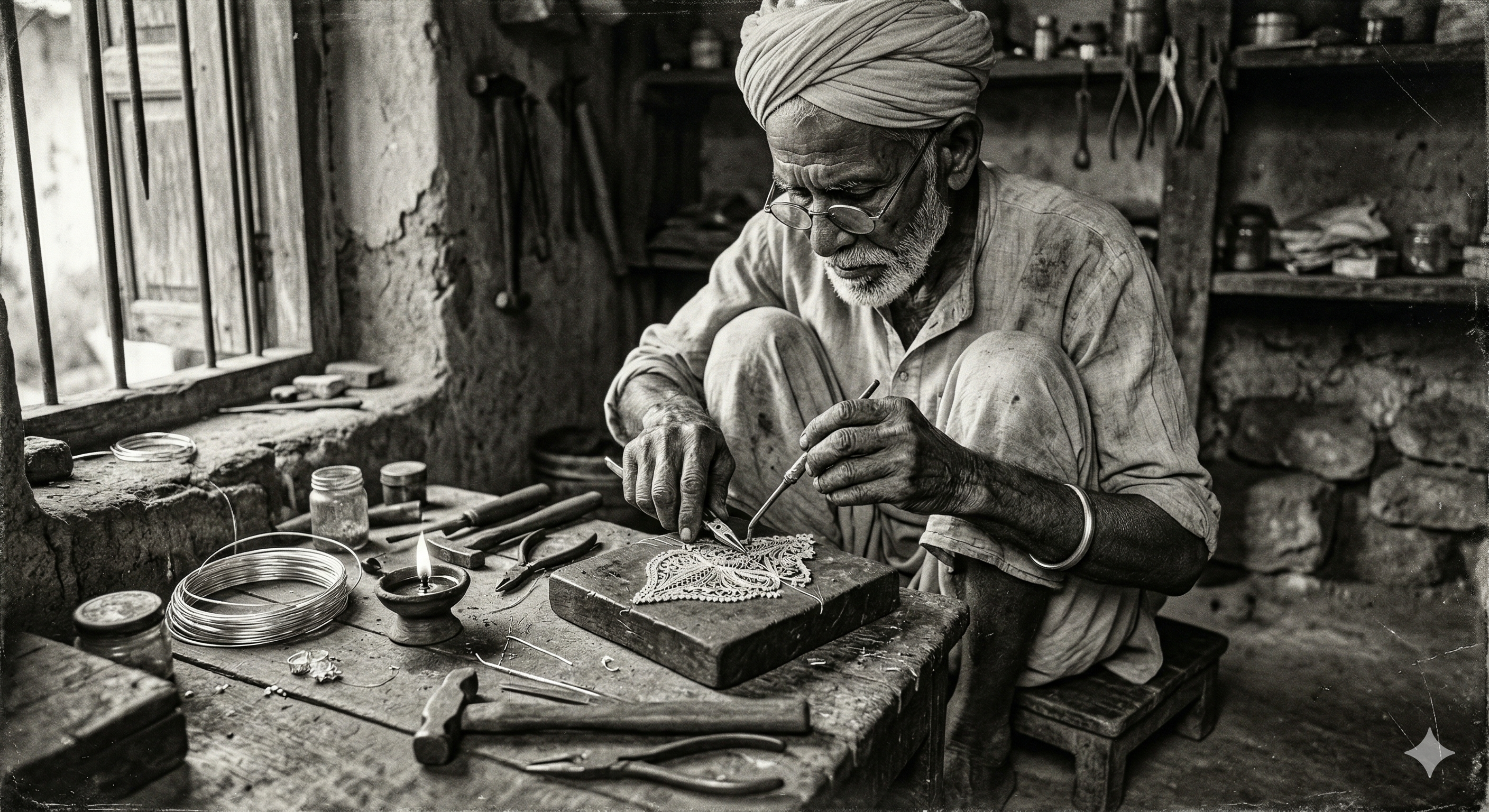

Padmesh is not born from silver alone.
It is born from a journey.
Centuries ago, on the banks of the Mahanadi in Cuttack, stood one of India’s most significant ports of trade. From here, the legendary Sadhabas set sail in magnificent boats, navigating across the Bay of Bengal to the shores of Indonesia, Bali, and Southeast Asia. This maritime exchange, now remembered through the annual Bali Jatra, was not merely about commerce. It was about culture, craftsmanship, and the movement of ideas across civilizations.
The boat in the Padmesh insignia is a tribute to this very legacy. It represents movement, exchange, and the beginning of Odisha’s global identity. It is a symbol of a time when Indian craftsmanship travelled the world, carrying with it stories, skill, and sophistication.
At the heart of this exchange was Cuttack, a city that quietly became one of the most refined centres of silver filigree craftsmanship. Known locally as Tarakasi, this art form is a testament to precision and patience, where silver is transformed into intricate patterns through meticulous handwork. Every curve, every thread, every detail reflects hours of labour and generations of inherited knowledge.
Yet, over time, this craft remained confined to traditional markets, often reduced to commodity and ceremonial relevance. Padmesh emerges to change that narrative.

Reclaiming a Global Legacy
Padmesh repositions Odisha’s filigree not as a relic of the past, but as a form of contemporary luxury rooted in history. Just as the boats once carried Indian craftsmanship across oceans, Padmesh carries this legacy into modern spaces—homes, collections, and meaningful moments.
Each piece created by Padmesh is a continuation of that journey. It reflects the same principles that defined the ancient trade routes:
• Exchange of value, not transaction of material
• Craftsmanship as identity, not occupation
• Objects as carriers of culture, not mere utility
The brand does not treat silver as a commodity measured by weight. It treats it as a medium of expression, shaped by time, skill, and cultural continuity.
From Cuttack to the World
In recent years, the significance of Odisha’s silver filigree has begun to regain national attention, including recognition at the highest levels of leadership in India. This acknowledgment reinforces what has always been true: that this craft is not just regional, but globally relevant.
Padmesh builds on this momentum, positioning itself as the modern custodian of this heritage. It brings structure, design discipline, and luxury retail experience to a craft that has always deserved a larger stage.

The Boat as a Living Symbol
The Padmesh insignia is not ornamental. It is a narrative.
The boat represents:
• The courage to journey beyond boundaries
• The exchange of culture across geographies
• The origin of Odisha’s global identity
• The movement of craftsmanship from past to present
Just as those vessels once carried goods across oceans, Padmesh carries heritage into the future.
A New Chapter in an Old Story
Padmesh stands at the intersection of history and modernity.
Through every ornament, every object, and every crafted piece, Padmesh ensures that the story of Cuttack, of Bali Jatra, and of silver filigree continues to evolve.
What once sailed across seas now finds its place in refined spaces across the world.
“Padmesh is where heritage travels forward, shaped in silver.”


Comments